Aswan, Egypt, Dec 2005: After exploring some ancient tombs on the westbank of the Nile (featured here)- we decided to walk across the open desert to the ruined 7th century monastery of St. Simeon. It didn’t look far, but in the heat and harsh enviroment of the desert, it proved to be a bit more challenging.


The Monastery of St Simeon dates back to the 7th century, it survived as a Christian stronghold of southern Egypt up until being sacked by Saladin in 1173 and abandoned. An alternative theory suggests a water shortage was the reason for the exodus. While still in use the monastery could house up to 300 monks, and additionally receive up to 100 pilgrims at a time.


The Monastery was given the name St. Simeon later on by archaeologists and travelers- but earlier Arabic and Coptic sources called it Anba Hatre (Hadra, Hidra, or Hadri), after an anchorite who was consecrated a bishop of Syene (Aswan) by Patriarch Theophilus (385-412 AD). 

Anba Hatre married at the age of eighteen, and legend has it that just after the wedding he encountered a funeral procession which inspired him to preserved his chastity and later become a disciple of Saint Baiman.

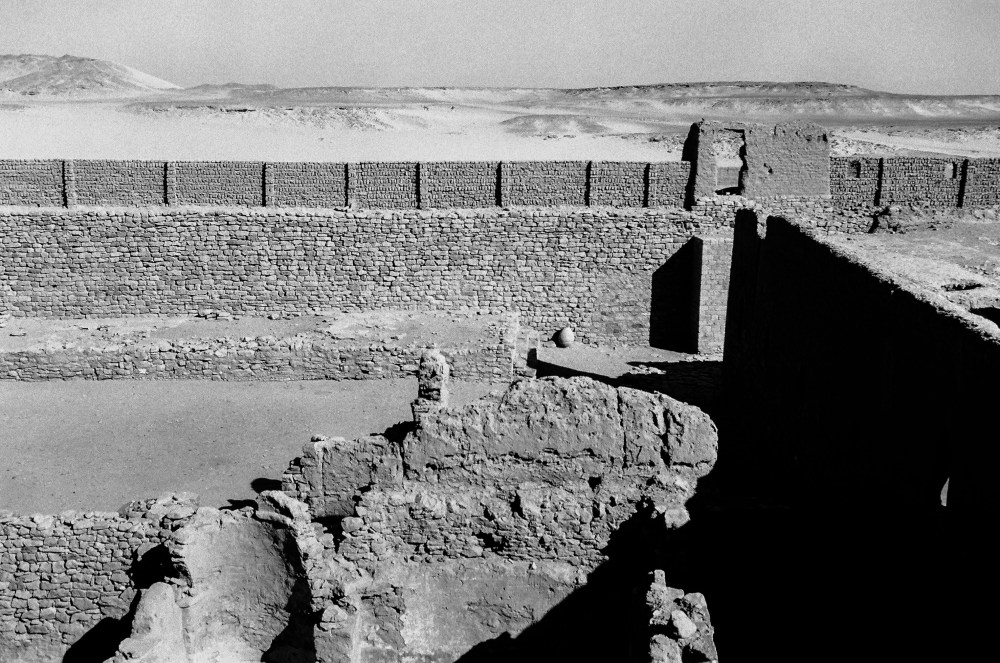
Little actual archaeological attention has really ever been paid to this ancient site. It was examined and published by Grossmann in 1985, and in 1998 the inspectors of the antiquities removed some debris from the church, but apparently little else was accomplished.


 ferguscunningham.com